
Mount Everest Climb
The roof of the world
In Spring 2027, we are assembling a small team of climbers committed to climbing Everest the right way.
This is a deliberately built team. Every climber is selected based on experience, preparation, and fit for the team. The objective is simple: move well, make good decisions, and give ourselves a real opportunity when conditions allow.
Mountain Madness has over 40 years of experience in the Himalaya, with a long history on Everest. That experience shapes how this expedition is run. Small team size. 1:1 climber to Sherpa support. Leadership that stays engaged from Base Camp to the summit.
The structure reflects the objective. We move through the Khumbu Valley to Base Camp, take the time to acclimatize properly, including an ascent of Lobuche East as part of the process. From there, we build through rotations on Everest, arriving at the summit rotation ready, not rushed. The schedule remains flexible and is dictated by the mountain.
This is a comfortable, well-run expedition, but it is not built around luxury. Everything is in place to support performance, recovery, and sound decision making at altitude.
Everest demands preparation, discipline, and patience. Readiness is evaluated, not assumed. Not every applicant will be accepted.
If you are an experienced climber actively preparing for Everest and looking for a small, capable team, let’s set up a time talk.
-
Why Mountain Madness
Mountain Madness brings more than four decades of Himalayan experience, a legacy rooted in the vision of legendary Everest guide Scott Fischer, and a reputation for balancing ambitious goals with thoughtful expedition leadership.
Since 1984, we have focused on small, team-oriented expeditions where climbers receive personalized support from experienced guides and a highly skilled Sherpa team. On Everest, we emphasize a gradual acclimatization process, strong logistics, quality equipment, and extensive Sherpa support that allows climbers to conserve energy for the summit push.
Our philosophy is built around preparation, teamwork, and individualized attention rather than operating large commercial teams, giving climbers a more personal and supportive experience on the world’s highest mountain.
-
Qualifications
There is no single path to Mount Everest.
Over the decades, climbers have arrived on Everest with a wide range of backgrounds, experiences, and accomplishments. While many have climbed other major peaks around the world, there is no specific mountain, or checklist of mountains, that automatically qualifies someone for Everest.
At Mountain Madness, we evaluate every applicant individually. Our goal is to understand the full picture of a climber’s experience, technical abilities, fitness, judgment, and readiness for a high altitude expedition.
When reviewing applications, we consider factors such as:
- Overall mountaineering experience and progression
- Time spent at altitude and performance in demanding environments
- Technical proficiency on snow, ice, and glaciated terrain
- Physical conditioning and endurance
- Previous expedition experience in remote mountain settings
- Risk management, decision making, and self sufficiency
- Ability to work effectively as part of a team
Successful Everest climbers typically demonstrate a consistent commitment to developing their skills and experience over time. Just as important as technical ability are qualities such as patience, resilience, adaptability, humility, and good judgment.
Because every climber’s background is unique, we encourage prospective participants to contact us for a conversation about their experience and goals. We are happy to review your climbing résumé and help determine whether Everest is an appropriate next step, or recommend additional objectives that may help you prepare for success.
Our approach is simple: we are not looking for climbers who have followed a specific path. We are looking for climbers who have developed the skills, experience, fitness, and mindset necessary to take on one of the world’s great mountaineering challenges.
-
Reading list
EVEREST/CLIMBING
Everest: The West Ridge
Hornbein, Tom
1989. 181 pp, color photos. The first American ascent of Everest, and traverse of the summit via the West Ridge.High Adventure
Hillary, Edmund
1955, 1st UK or American edition. 224 pp, 22 ill. Hillary’s principal book on his Everest climb. Includes the 1951 Reconnaissance Expedition, the Cho Oyu attempt, and his Everest success.Kathmandu to Mount Everest
Uchida, Ryohei
1991. 128 pp, 180 color photos. A complete description of the entire Khumbu region of Nepal, with lavish photographic coverage. Practical information on travel and trekking.Seven Summits
Bass, Dick; Wells, Frank and Ridgeway, Rick
1986. 336 pp, color photos. Bass was the first person to climb the seven continental summits. This book started the modern quest to climb continental, national and state high points.The Crystal Horizon
Messner, Reinhold
1998. 322 pp, color photos. Messner’s remarkable solo ascent of Everest without oxygen has captured the imagination of the climbing world like no other single event since the first ascent in 1953. This is his record of the mental, emotional and physical efforts to succeed beyond the limits of human endurance.Climbing Mt. Everest: A Bibliography
Salkeld and J. Boyle
1993. A bibliography of every book or magazine article ever written on Mt. Everest. Includes a chronology of climbs.GENERAL
Trekking in Nepal: A Traveler’s Guide
Bezruchka, Steven
Mountaineers, Seattle, Washington; sixth edition, 1991.Insight Guide to Nepal
Hoefer, H.J. et al
A.P.A. Productions, 1983 (Highly Recommended).
30Insight Guide to Nepal
Raj, PrakashLonely Planet, South Yarra, Vic. Australia.
Many People Come, Looking, Looking
Rowell, Galen
The Mountaineers, 1980.HISTORICAL
An Account of the Kingdom of Nepal, and of the Territories Annexed to This Dominion by House of Gurkha
Hamilton, Francis
Archibold Constable and Co. Edinburgh, 1819.History of Nepal
Wright, Daniel, editor; Vamsavali
With an Introductory Sketch of the Country and People of Nepal. Translated from the Parbatiya. University Press 1877, Cambridge. Second Edition, Susil Gupta, Calcutta 1958.PEOPLES, ART AND CULTURE
Hindu-Buddhist Festivals of Nepal
Hemanta K. Jha
South Asia Books, 1996.Festivals of Nepal
Anderson, Mary M
George Allen and Unwin, London, 1971.The Art of Nepal
Aran, Lydia
Ratna Pustak Bhandar, Kathmandu, 1974.People of Nepal
Bista, Dor BahadurRhythms of a Himalayan Village
Downs, Hugh R.
Harper & Rowe, New York, 1980.The Sherpas of Nepal & Buddhist Highlanders
Furer-Haimendorf, Christoph von
University of California Press, Berkeley and Los Angeles, 1964.Schoolhouse in the Clouds
Hillary, Edmund
Doubleday, Garden City New York, 1964.Moral Knowing in a Hindu Sacred City: An Exploration of Mind, Emotion, and Self
Parish, Steven M.
31
Columbia University Press, New York, 1994.The Splendour of Himalayan Art and Culture Jeratha, Asoka
Indus, 1998.RELIGION
The Way to Shambhala
Bernbaum, Edwin
Anchor Press, New York, 1980.The Gods and Goddesses of Nepal
Detmold, Geogrey
Rubel, Mary
Ratna Pustak Bhandar, Kathmandu, 1979.Mani-Rimdu, Sherpa Dance Drama
Jerstad, L.G.
University of Washington Press, Seattle, 1969.An Introduction to Hinduism
Flood, Gavin D.
Cambridge University Press, Cambridge, 1996Hinduism
Sen, K.M.
Penguin Books, Harmondsworth, 1961.MEDICAL
High Altitude Medicine and Physiology
West, John B.
Schoene, Robert B.
Milledge, James S.
Chapman and Hall, Great Britain, 1989.
The Everest 2027 Team
Behind every successful Everest expedition is an exceptional team. From expedition leadership and high-altitude medicine to logistics, operations, and Sherpa support, our experienced team works together to provide the expertise, preparation, and decision-making required for a safe, rewarding, and world-class Himalayan expedition.
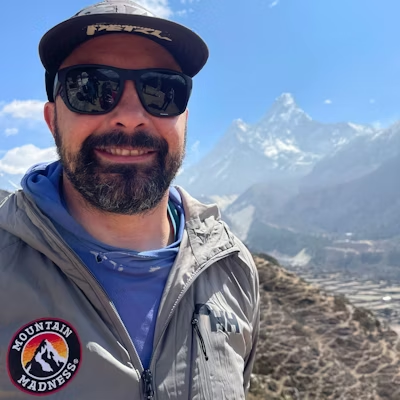
Alejo Lazzati
Expedition Leader & Lead GuideIFMGA Mountain Guide, Wilderness EMT, and Avalanche Safety Instructor with close to two decades of international guiding experience, including expeditions to Denali, K2, and Everest. Alejo leads the expedition from start to finish, overseeing guiding, logistics, safety, risk management, rotation strategy, and daily decision-making. His calm leadership, technical expertise, and people-first approach create an environment where climbers can perform at their best.
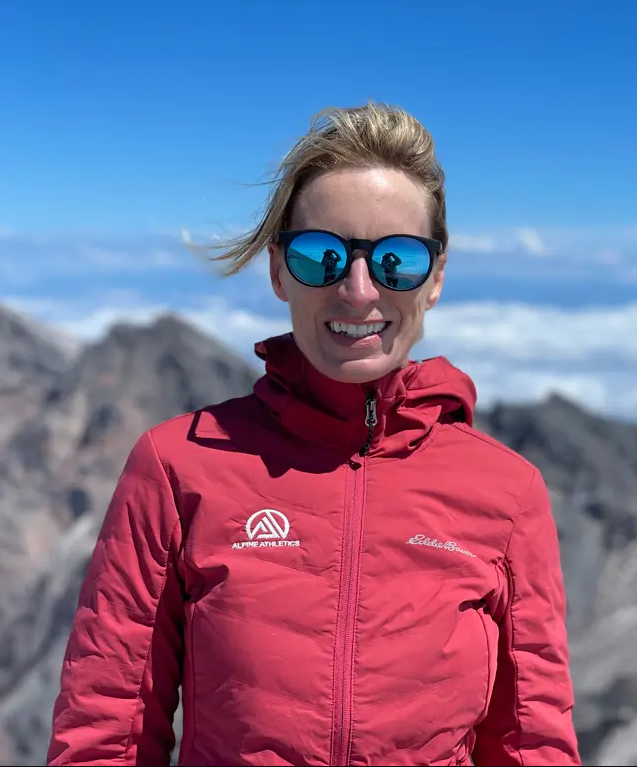
Lisa Thompson
Expedition CoachMountain Madness Owner, Seven Summits climber, and the second American woman to summit K2, Lisa provides strategic leadership and coaching throughout the expedition. As the founder of Alpine Athletics, she has spent nearly two decades helping mountaineers prepare for ambitious objectives through individualized physical, mental, and tactical protocols, bringing the same disciplined, preparation-first philosophy to every Mountain Madness expedition.
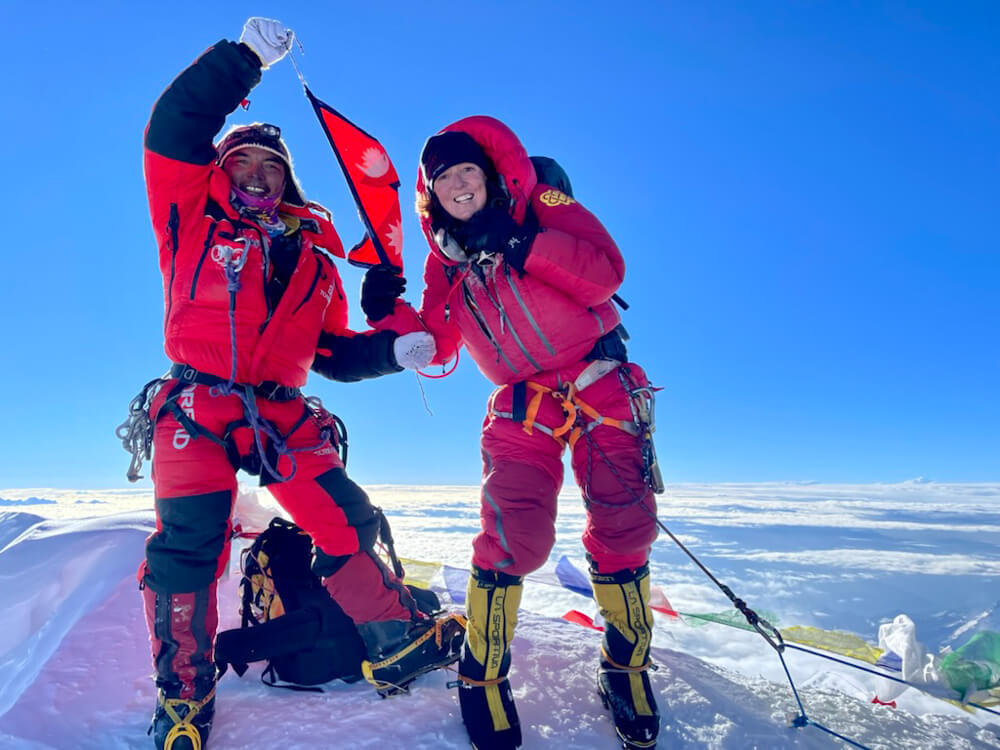
Dr. Tracee Metcalfe
Expedition DoctorEmergency physician, high-altitude expedition doctor, and the first American woman to summit all 14 of the world's 8,000-meter peaks, Dr. Tracee Metcalfe provides pre-expedition medical consultations and ongoing high-altitude health monitoring and telemedicine support throughout the expedition.
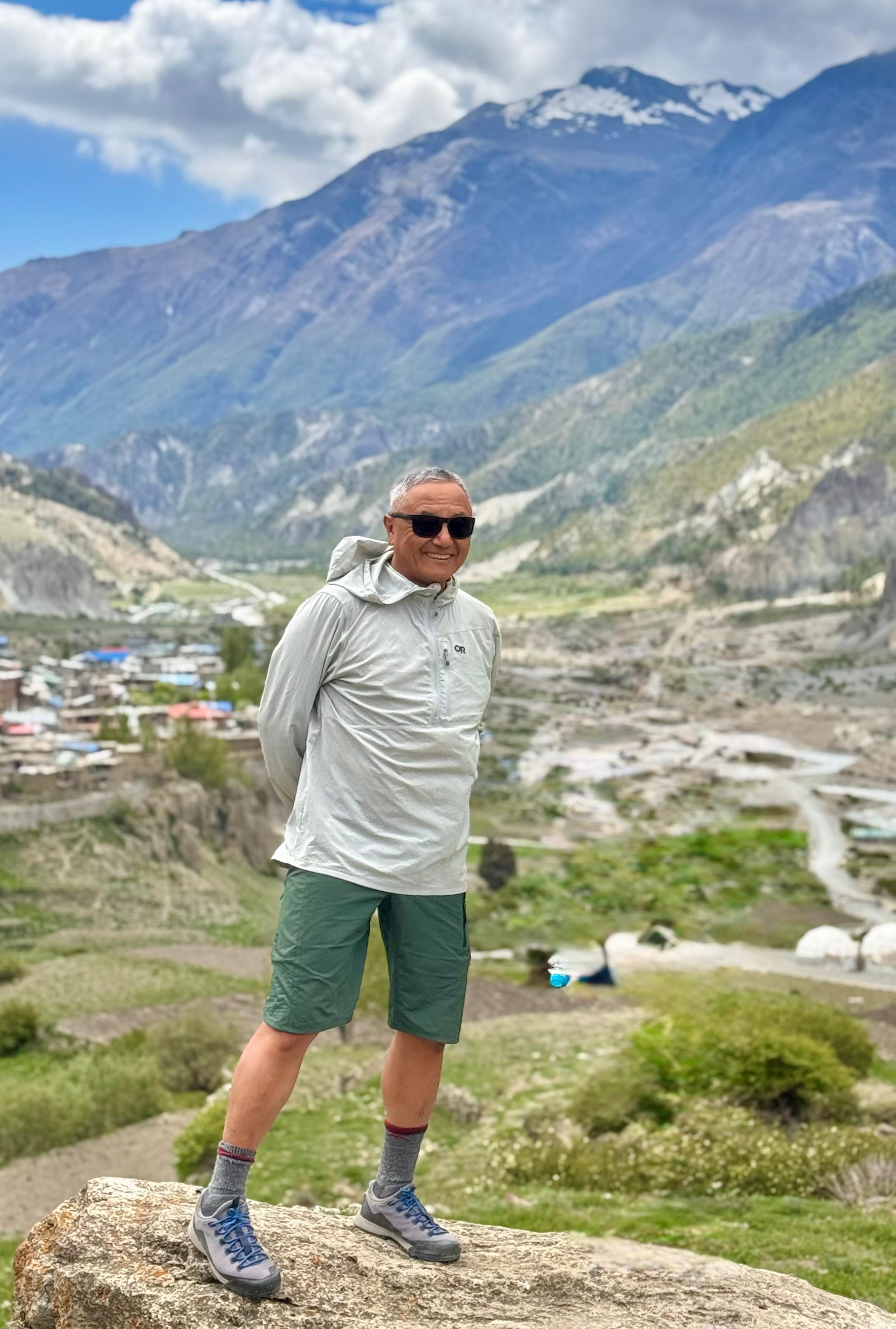
Ang Jangbu & Pasang Tshering
Nepal Operations & BeyulWith more than four decades of Himalayan expedition experience, Ang Jangbu and Pasang lead our in-country operations through Beyul Adventure. Their team oversees permits, logistics, Sherpa staffing, transportation, base camp operations, and the countless behind-the-scenes details. Deeply respected throughout the Khumbu region, they combine world-class operational expertise with an unwavering commitment to the Sherpa community, safety, and exceptional client service.
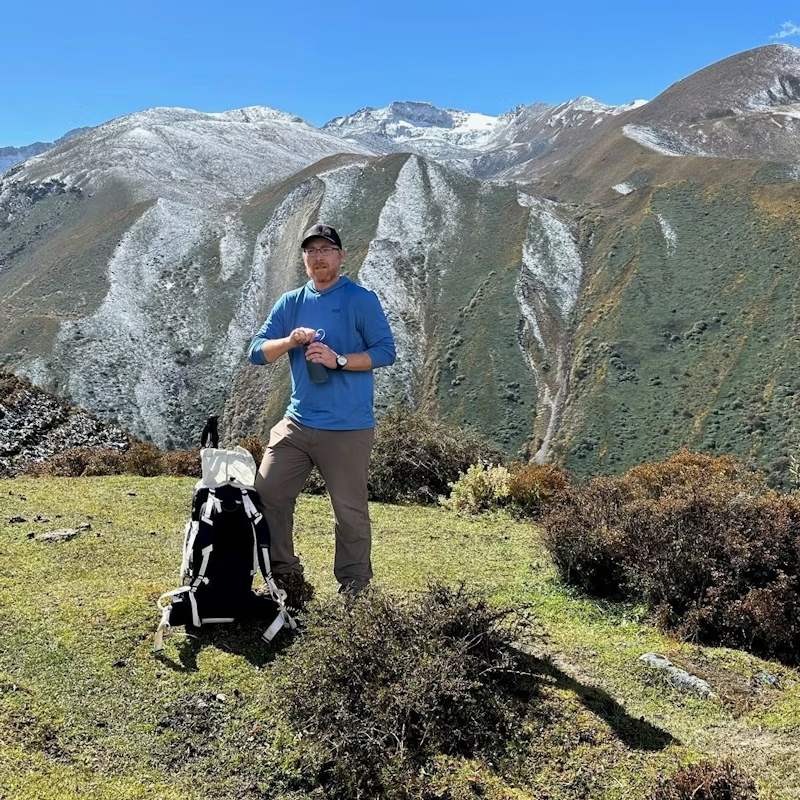
Tye Chapman
International Program DirectorWith nearly 20 years in the industry, Tye oversees expedition planning, logistics, communications, and team support before, during, and after the expedition, ensuring every detail comes together for a seamless team experience.

Sherpa Support Team
High-Altitude Support & 1:1 RatioOur dedicated climbing Sherpa team consists of elite high-altitude mountaineers from the Khumbu valley with multiple Everest summits each. Working on a 1:1 climber-to-Sherpa ratio above Base Camp, they manage high-altitude camps, supplemental oxygen systems, and fixed-line safety protocols throughout the expedition.
Mount Everest South Col Route
Explore the expedition route from Lukla (2,860m) through the Khumbu Icefall to the Summit (8,848m)
View complete 9-month preparation series, itinerary breakdown, pricing inclusions, and technical readiness audit.
Have a Question? Contact Us!
Price
-
Mount Everest
$86,500 – 57 Days / Includes travel time
-
Price Includes
Pre-Expedition Preparation & Support
- Choice of one complimentary Everest Base Camp trek spot for a family member or friend, or nine months of training with Alpine Athletics
- Training Audit with Alpine Athletics
- Monthly Team Zoom Calls (starting September 2026)
- Team Coach: Lisa Thompson at EBC
- Pre trip consult with Dr. Tracee Metcalfe (14x 8000m experience)
- Access to Dr. Metcalfe (via Zoom) during expedition
Leadership & Climbing Support
- Expedition Leadership: Alejo Lazzati, Ang Jangbu Sherpa
- Dedicated 1:1 Personal Climbing Sherpa plus an additional Sherpa to carry oxygen on summit rotation
- All expedition staff including Sherpa support, base camp personnel, porters and pack animals
Permits & Expedition Services
- Climbing permit, Nepal liason fees and park fees
- Weather forecasting services
- Expedition communication system (VHF radios, SAT phone, etc.)
Climbing Program
- Lobuche East acclimatization climb minimizing time in the Khumbu Icefall
- Supplemental oxygen from Camp 3, including oxygen cylinders, mask, regulator, and flow rates up to 4 LPM
- Flexible rotation schedule
Base Camp & High Camp Support
- Full base camp setup
- Full Camp 2 Set up with cooks & dining tents
- All team climbing gear, tents, food and cooking gear
Food
- All food and lodging during the scheduled trek and climb
- Selection of U.S. snack foods throughout the expedition
Travel & Accommodations
- Helicopter flight Kathmandu → Lukla
- Fixed wing flight Lukla → Kathmandu
- Airport transfers
- Four scheduled hotel nights in Kathmandu at the Yak-n-Yeti (single room)
Expedition Events
- Welcome Dinner
- Puja Ceremony at base camp
- Celebration Dinner
Connectivity
- Phone and wireless internet available in base camp for additional fee
-
Price Does Not Include
Travel & Documentation
- International airfare
- Nepal entry visa and airport fees
Personal Equipment
- Personal climbing gear and clothing
Insurance
- Travel insurance with trip cancellation, medical and evacuation policy
Personal Expenses
- Personal expenses (phone calls, wifi, laundry, room service, extra hotel nights, extra meals, tea house showers, etc.)
- Meals in Kathmandu (see itinerary for details)
- Alcoholic and bottled beverages
- Wifi at basecamp — available for purchase
Schedule Changes
- All expenses associated with non-scheduled departure
- Expenses related to a personal descent down valley for rest and recovery
Gratuities
- Base camp staff (cooks, porters, etc.) tip pool ($500 standard)
- Climbing Sherpa Bonus ($2000 standard)
- Expedition Leaders (at your discretion)
Additional Oxygen
- Supplemental Oxygen above the included O2 ($2250 per cylinder) delivered to upper mountain camps
-
Payment Schedule
- $5,000 non-refundable deposit upon confirmation of your eligibility to join the expedition
- $45,000 non-refundable payment due 180 days prior to departure
- Balance due 120 days prior to departure
- Payments can be made by check, wire transfer or ACH
Dates
-
2027 Everest Climb Dates
- Apr 1, 2027 — May 27, 2027 - 10 Spots Remaining
Policies
Cancellation / Refund Policy
- MMI strongly recommends trip cancellation/interruption and evacuation insurance for Mount Everest Expedition. Our insurance partner, Ripcord, offers comprehensive travel insurance including trip cancellation, as well as rescue/evacuation policies and can assist in answering any questions. In addition, Participant is expected to have sufficient medical insurance as prescribed by their country of origin. Participant understands that MMI does not include any type of insurance with the cost of the trip.
- If you decide to cancel your trip or change your itinerary, MMI must be notified in writing. Your trip will be cancelled from the date written notice is received and all amounts paid will be forfeited.
- Circumstances outside the control of MMI and its partners, may require amended cancellation/refund policies. Such circumstances may include, but are not limited to COVID-19, natural disasters, terrorism and so forth.
- No refunds on the deposit, nor balance payment will be provided for Mount Everest Expedition due to the great expense incurred planning/facilitating such an expedition.
Trip Insurance
We strongly recommend the purchase of travel cancellation insurance to protect you from the unexpected. You aren’t likely to think of it now, but people do get ill, break a bone, have a family emergency or get assigned to a last-minute business trip. If you are in remote areas, please note that emergency rescue & evacuation can be very expensive.
We also strongly urge you to consider rescue and evacuation insurance if your own policy does not provide the coverage needed. Services available may include, but are not limited to, helicopter evacuation, medical care, etc.
If you choose not to purchase insurance, you assume full responsibility for any expenses incurred in the event of a medical emergency and/or evacuation, as well as for trip cancellation, interruption, lost luggage, etc. We are not the experts and therefore ask that you please consult our travel insurance partner directly with any specific questions.
To protect against losses due to illness, accident, or other unforeseen circumstances, Mountain Madness strongly recommends the purchase of travel insurance as soon as possible after making a deposit. Mountain Madness has partnered with Redpoint Resolutions as our preferred travel insurance provider. Redpoint’s Ripcord Rescue Travel Insurance™ is designed for adventurers.
For a quote, or to purchase travel insurance, please click this link Ripcord Rescue Travel Insurance™ or call +1 – 415-481‑0600. Pricing varies based on age, trip cost, trip length, and level of coverage.
Critical benefits of Ripcord Rescue Travel Insurance include:
- A completely integrated program with a single point of contact for emergency services, travel assistance, and insurance claims
- Evacuation and rescue services from your point of injury or illness to your hospital of choice
- Comprehensive travel insurance for trip cancellation/interruption, primary medical expense coverage, baggage loss or delay, emergency accident and emergency sickness medical expense, emergency dental, accidental death and dismemberment, and more
- Optional security evacuation coverage in case of an unplanned natural disaster or other security events
- Waiver for pre-existing conditions (must be purchased within 14 days of tour deposit)
- Optional “Cancel for Any Reason” coverage (must be purchased within 14 days of tour deposit)
Itinerary
Travel Information
The total number of days for your trip includes all travel to and from your destination, with some exceptions. Dates listed on the website start with your departure date from the US and include the day you arrive home.
For this trip you will need to arrive in Kathmandu, Nepal on Day 3 of the itinerary. You will cross the date line in mid-flight to Asia, thus losing a day. If you are traveling from outside the US. your itinerary may require less time to reach Kathmandu, so all that is required is that you arrive on Day 3 of the itinerary, where Mountain Madness services begin. If you arrive early, we can assist with extra hotel arrangements and activities. Otherwise, you can arrive at any time on Day 3. You will be met at the airport by a Mountain Madness representative and transferred to your hotel.
This itinerary represents the maximum duration of the expedition; however, the schedule is inherently flexible and is adjusted in the field based on acclimatization, climber condition, team dynamics, and, most importantly, weather and summit window opportunities. Movement on Everest is dictated by short, favorable weather windows, and plans may be accelerated or delayed to align with these conditions. As a result, changes to the itinerary are common, and flexible or changeable return travel arrangements is standard practice.
2027 Everest Itinerary
-
April 1-2
Travel
Travel to Nepal takes several days coming from the US. In order to provide you with the exact number of days needed for this excursion, we have included travel time in the itinerary. You will depart from the US on Day 1 and, by crossing the international date line, arrive in Kathmandu on Day 3, when Mountain Madness services begin. If you are traveling from somewhere other than the US, travel time may vary, however Mountain Madness services still begin on Day 3.
-
April 3
Arrive Kathmandu
Arrive at the Kathmandu airport, where a Mountain Madness representative will meet you and transfer you to the Hotel Yak & Yeti. After time to settle in and recover from your travels, we’ll gather in the evening for a team meeting.
Elevation: 4,383 ft / 1336 m
Accommodation: Hotel Yak & Yeti
Meals: On your own -
April 4
Final Preparations Kathmandu
Today is reserved for final preparations including permits, gear checks, packing, and expedition briefings. There may also be time to relax, explore nearby temples and markets, or enjoy the hotel before heading into the mountains. In the evening we’ll get together for our official Welcome Dinner.
Elevation: 4,383 ft / 1336 m
Accommodation: Hotel Yak & Yeti
Meals: Breakfast, Welcome Dinner -
April 5
Fly to Lukla By Helicopter and trek to Phakding
A spectacular helicopter flight into the Himalayan foothills brings us to Lukla, where we meet our trekking team and begin our journey into the Khumbu. The trail descends gently through villages and forest to the riverside settlement of Phakding
Elevation: 8,563 ft / 2610 m
Distance: ~4.5 mi / 7.2 km
Time: 2.5 – 3 hrs
Accommodation: Teahouse in Phakding
Meals: Breakfast, Lunch, Dinner -
April 6
Trek to Namche Bazaar
We follow the Dudh Kosi River, crossing suspension bridges before entering Sagarmatha National Park. From there, a steady climb brings us to Namche Bazaar, the vibrant hub of the Khumbu region.
Elevation: 11,286 ft / 3440 m
Distance: ~4.5 mi / 7.2 km
Time: 5 – 6 hrs
Accommodation: Teahouse in Namche Bazaar
Meals: Breakfast, Lunch, Dinner -
April 7
Acclimatization hike to Nangkartshang / Everest View area
Our first acclimatization day includes a gradual hike above Namche for sweeping views of Everest, Lhotse, and Ama Dablam. We return to town for lunch and a relaxed afternoon to explore or rest.
Elevation: 11,811 ft / 3600 m
Time: 3 – 4 hrs
Accommodation: Teahouse in Namche Bazaar
Meals: Breakfast, Lunch, Dinner -
April 8
Trek to Khunde
We traverse above Namche through Khumjung and onward to Khunde, stopping at the Everest View Hotel and passing stone walls, grazing yaks, and classic Sherpa villages with expansive mountain views along the way.
Elevation: 12,664 ft / 3860 m
Distance: ~3.5 mi / 5.6 km
Time: 4 – 5 hrs
Accommodation: Teahouse in Khunde
Meals: Breakfast, Lunch, Dinner -
April 9
Trek to Phortse
A scenic high trail leads us toward Phortse, with views across the valley and glimpses of Everest along the way. Phortse is home to many of the Khumbu’s most accomplished climbing Sherpas. Possible visit to the Khumbu Climbing Center.
Elevation: 12,664 ft / 3860 m
Distance: ~3.5 mi / 5.6 km
Time: 4 – 5 hrs
Accommodation: Teahouse in Phortse
Meals: Breakfast, Lunch, Dinner -
April 10
Trek to Pangboche
Today’s shorter trek allows for continued acclimatization as we make our way toward Pangboche. The trail offers stunning views of Ama Dablam and Everest in a more open alpine setting.
Elevation: 13,200 ft / 4000 m
Distance: ~2.1 mi / 3.4 km
Time: 2 – 3 hrs
Accommodation: Teahouse in Pangboche
Meals: Breakfast, Lunch, Dinner -
April 11
Trek to Dingboche
We continue along a high trail above the Imja Khola, eventually crossing into a wide alpine valley surrounded by dramatic peaks. Dingboche becomes our base for further acclimatization.
Elevation: 14,469 ft / 4410 m
Distance: ~5 mi / 8 km
Time: 3 – 4 hrs
Accommodation: Teahouse in Dingboche
Meals: Breakfast, Lunch, Dinner -
April 12
Acclimatization hike to Nangkartshang Ri
A key acclimatization hike up Nangkartshang Ri. From the ridge, we take in sweeping views of Makalu, Ama Dablam, and the surrounding peaks before returning to the village.
Elevation: 14,469 ft / 4410 m
High Point: 16,600 ft / 5060 m
Distance: Short hike in the area
Time: 3 – 4 hrs
Accommodation: Teahouse in Dingboche
Meals: Breakfast, Lunch, Dinner -
April 13
Trek to Dzongla
Leaving the main trail, we traverse into quieter terrain beneath the dramatic faces of Cholatse and Taboche. The route feels more remote as we make our way across rugged alpine ground to Dzongla.
Elevation: 15,846 ft / 4830 m
Distance: ~5 mi / 8 km
Time: 5 – 6 hrs
Accommodation: Teahouse in Dzongla
Meals: Breakfast, Lunch, Dinner -
April 14
Trek to Lobuche
We rejoin the main Everest route and trek steadily from Thukla to the pass above, where a collection of memorials honors climbers and Sherpas who lost their lives on Everest, including Mountain Madness founder Scott Fischer. From here, we continue along the moraine of the Khumbu Glacier to Lobuche.
Elevation: 16,109 ft / 4910 m
Distance: ~5 mi / 8 km
Time: 4 – 5 hrs
Accommodation: Teahouse in Lobuche
Meals: Breakfast, Lunch, Dinner -
April 15
Acclimatization Hike
A lighter day to rest and continue acclimatizing. We may take a short hike above camp for additional altitude exposure while preparing for our move to Base Camp.
Elevation: 16,109 ft / 4910 m
Distance: Short hike in the area
Time: 2 – 3 hrs
Accommodation: Teahouse in Lobuche
Meals: Breakfast, Lunch, Dinner -
April 16
Trek to Everest Base Camp
We follow the rocky moraine past Gorak Shep and continue on to Everest Base Camp, set on the Khumbu Glacier at the base of the Icefall.
Elevation: 17,575 ft / 5357 m
Distance: ~2.5 mi / 4 km
Time: 3 – 4 hrs
Accommodation: Tents
Meals: Breakfast, Lunch, Dinner -
April 17
Rest Day
A full rest day to recover, hydrate, and settle into life at Base Camp as we prepare for the climbing phase ahead.
Elevation: 17,575 ft / 5357 m
Accommodation: Tents
Meals: Breakfast, Lunch, Dinner -
April 18
Puja
We participate in a traditional puja ceremony, an important blessing for safe passage on the mountain. This marks the official start of our climbing phase of the expedition.
Elevation: 17,575 ft / 5357 m
Accommodation: Tents
Meals: Breakfast, Lunch, Dinner -
April 19
Return to Lobuche Village
We descend back to Lobuche to begin our acclimatization climb on Lobuche East.
Elevation: 16,109 ft / 4910 m
Distance: ~2.5 mi / 4 km
Time: 2 – 3 hrs
Accommodation: Teahouse in Lobuche
Meals: Breakfast, Lunch, Dinner -
April 20
Climb to Lobuche High Camp
Leaving camp we ascend a rugged moraine trail and rocky slopes, gradually gaining elevation that requires occasional scrambling as the terrain becomes more alpine and exposed. After a few hours, reach a small, windswept High Camp perched above the glacier, where climbers prepare for the summit push amid dramatic views of the Everest region.
Elevation: 17,712 ft / 5400 m
Time: 3 – 4 hrs
Accommodation: Tents
Meals: Breakfast, Lunch, Dinner -
April 21
Summit Lobuche East
From High Camp, begin a pre-dawn alpine start, ascending snow and ice slopes on a fully guided route using crampons, ice axe, and fixed lines as the terrain steepens toward the summit ridge. Reach the summit of Lobuche East for expansive views of Mount Everest, Lhotse, and Nuptse, then descend carefully back to High Camp or Base Camp.
Elevation: 20,075 ft / 6119 m
Time: 10 – 13 hrs
Accommodation: Teahouse in Lobuche
Meals: Breakfast, Lunch, Dinner -
April 22
Return to Everest Base Camp
We return to Base Camp and settle back into camp as we prepare for our rotations on Everest.
Elevation: 17,575 ft / 5357 m
Time: 2 – 3 hrs
Accommodation: Tents
Meals: Breakfast, Lunch, Dinner -
April 23-27
Rest, training and preparation
These days are spent resting, training and preparing for the first rotation in the Khumbu Icefall. We will dial in our systems and take a dry run to the base of the icefall.
Elevation: 17,575 ft / 5357 m
Accommodation: Tents
Meals: Breakfast, Lunch, Dinner -
April 28-May 3
Acclimatization Rotation to Camp 3 (C1, C2 & tag C3)
We begin our first rotation through the Khumbu Icefall, moving in the early morning hours when conditions are most stable. Crossing ladders and weaving through seracs, we reach Camp 1 in the Western Cwm and stop for the night. From C1 we climb higher toward Camp 2 for additional acclimatization before returning to Camp 1 for the night.
After a second night at Camp 1, we move to Camp 2, where we take a rest day and continue adjusting to the altitude. To complete the rotation, we climb partway up the Lhotse Face to tag Camp 3 before descending back to Camp 2, then all the way back to Base Camp the following day.
Camp 1: 20,000 ft / 6100 m
Camp 2: 21,000 ft / 6400 m
Camp 3 (high point): 22,300 ft / 6800 m
Accommodation: Tents
Meals: Breakfast, Lunch, Dinner -
May 4-7
Base Camp Recovery
A vital period of rest and recovery at Base Camp as we regain strength and watch for a favorable weather window for the summit push.
Elevation: 17,575 ft / 5357 m
Accommodation: Tents
Meals: Breakfast, Lunch, Dinner -
May 8-14
Summit Rotation
When conditions align, we move back up through the Khumbu Icefall and return to Camp 2, where we spend the night and begin preparing for the summit push. From Camp 2, we climb the Lhotse Face on fixed lines to Camp 3; it’s a steady, physical day on steep terrain, and we keep things efficient before settling in for a short night. While sleeping at Camp 3, we begin using supplemental oxygen. From Camp 3 we climb through the Yellow Band and over the Geneva Spur to the South Col at Camp 4. Once in camp, we focus on resting, hydrating, and getting ready to move again.
That evening, we leave the South Col and begin the summit push, climbing through the night, reaching the Balcony (~8,400 m) around daybreak where we pause briefly to change oxygen. From there, we continue along exposed ridges to the South Summit and pass what was the Hillary Step, before the last push to the summit. After a few minutes at the top, we turn our focus to the descent, with the goal of making it back down to Camp 2, and Base Camp the following day.
Camp 3: 22,300 ft / 6800 m
Camp 4: 26,000 ft / 8000 m
Summit: 29,032 ft / 8848 m
Accommodation: Tents
Meals: Breakfast, Lunch, Dinner -
May 15
Pack-Up Base Camp
We begin packing and preparing to leave Base Camp after completing the climb, taking time to reflect on the expedition before heading down valley.
Elevation: 17,575 ft / 5357 m
Accommodation: Tents
Meals: Breakfast, Lunch, Dinner -
May 16
Trek to Pheriche
We descend from Base Camp into the valley, returning to greener terrain and thicker air after our time on the mountain.
Elevation: 13,950 ft / 4252 m
Distance: ~8.8 mi / 14.2 km
Time: 5 – 7 hrs
Accommodation: Teahouse in Pheriche
Meals: Breakfast, Lunch, Dinner -
May 17
Trek to Namche Bazaar
Continuing down through forests and villages, we retrace our steps back to Namche Bazaar, where we enjoy a more comfortable night and a chance to reflect on the climb.
Elevation: 11,286 ft / 3440 m
Distance: ~12.1 mi / 19.5 km
Time: 7 – 9 hrs
Accommodation: Teahouse in Namche Bazaar
Meals: Breakfast, Lunch, Dinner -
May 18
Trek to Lukla
Our final trekking day brings us back to Lukla, where we celebrate the journey with our team.
Elevation: 9,318 ft / 2840 m
Distance: ~11.3 mi / 18.2 km
Time: 6 – 8 hrs
Accommodation: Teahouse in Lukla
Meals: Breakfast, Lunch, Dinner -
May 19
Fly to Kathmandu
We return to Kathmandu by fixed wing flight and transfer to the Hotel Yak & Yeti, where a hot shower and comfortable bed await.
Elevation: 4,383 ft / 1336 m
Accommodation: Hotel Yak & Yeti
Meals: Breakfast, Celebration Dinner -
May 20-21
Kathmandu
Time to rest, explore the city, and celebrate the completion of the expedition with the team.
Accommodation: Hotel Yak & Yeti
Meals: Breakfast -
May 22-26
Contingency Days
Extra days are built into the schedule to allow flexibility for weather delays and summit timing. If not needed on the mountain, these days are spent in Kathmandu and en route home.
Accommodation: Hotel Yak & Yeti or Tents
Meals: Breakfast, Celebration Dinner (if in the Khumbu) / Breakfast (if in Kathmandu) -
May 27
Depart Kathmandu
Transfer to the airport and depart Nepal.
Elevation: 4,383 ft / 1336 m
Meals: Breakfast
Equipment for Mount Everest Climb
This is a comprehensive gear list. Depending on conditions for your trip, your guide may decide that some items are not needed.
-
Carrying Gear
-
Small Pack (40L)
Lightweight as possible with a volume approximately 2,500 cubic inches (40 liters)
-
Large capacity climbing pack (65+L)
Lightweight as possible with a volume of 4,000+ cubic inches (65+ liters)
-
2 Large duffel bags
Two at least 7,000 cubic inch capacity (150 liters) duffle bags. Must be durable and waterproof
Examples:
-
Small duffel bag
Large enough to hold everything you’re not taking on the mountain. Will be stored at hotel, to be used after trip
Examples:
-
Small padlock for duffel bags
Extra security
-
Baggage tags
Makes identifying your bags easy at airports or hotels
-
-
Sleeping Gear
-
Expedition quality sleeping bag (-20F down)
One down bag rated from -20°F / -30°C
-
Expedition quality sleeping bag (-40F Down or Synthetic)
One down or synthetic bag rated from -40°F / -40°C
-
Sleeping Pad (insulated inflatable X 2)
Two full length inflatable
Examples:
-
Sleeping pad (foam)
A foam pad will be provided but a supplemental sleeping pad is advised for warmth and comfort. Closed cell foam 3/4 or full length. This pad is used in conjunction with the first pad
Examples:
-
-
Climbing Gear
-
Alpine climbing harness
Must have adjustable leg loops and fit over all clothing
-
Mountaineering ice axe
under 5’7” use 60cm, 5’7”-6’2” use 60 or 65cm, over 6’2” use 70cm
-
Crampons w/ anti-balling plate
Steel 12-pont. Must be fit to climbing boots prior to trip, new-matic/hybrid type
-
Locking carabiners (3)
Three large, pear-shaped carabiners are best
-
Non-locking carabiners (8)
8 non-locking carabiners. wired straight-gates are recommended
Examples:
-
Belay device (plaquette)
Tube style
-
Ascenders (Pair)
One full set of ascenders with handles for fixed lines
-
Climbing helmet
Lightweight
-
50’ of perlon accessory cord
Accessory cord, made of nylon, is useful for many purposes on an expedition. You should bring 50 feet of 6mm cord
Examples:
-
Adjustable trekking poles
Three piece poles recommended
Examples:
-
-
Head and Face
-
Fleece or wool hat
It must cover the ears
Examples:
-
Shade hat or baseball cap
A visor hat with a good brim is essential for protection from the sun
Examples:
Mountain Madness trucker hat
-
Bandanas or neck gaiter
Various uses, i.e. cleaning glasses, sun protection when tied around the neck, etc. We have our own Mountain Madness neck gaiter available for purchase!
Examples:
Mountain Madness neck gaiter
-
Balaclava or Buff
A thin balaclava will add significant warmth on that cold summit day
Examples:
Outdoor Research, Marmot
-
Facemask
Neoprene or microfleece ski type
-
Nose guard
To protect you from the wind and sun
Examples:
Beko
-
Glacier glasses
100% UV protection with side shields and a hard-sided storage case
Examples:
-
Ski goggles
To fit over glacier glasses in high wind. Rose or amber lenses
Examples:
Smith, Oakley
-
-
Hands
-
Leather work gloves
One pair lightweight to spare your climbing while doing camp chores
-
Liner gloves
Two pairs thin fleece or synthetic
-
Softshell gloves
One pair medium-weight for daily wear when it’s not too cold
-
Expedition gloves
Insulated, water resistant shell with leather palms
Examples:
-
Expedition mitts
One pair Gore-Tex or equivalent, with textured palms and taped seams. Synthetic or down filled. Warm, heavy duty for cold temperatures
Examples:
-
-
Feet
-
Thin socks (6 pair)
Six pairs of synthetic or wool socks to wear under heavy wool socks to help prevent blisters and keep feet dry
Examples:
Smartwool or Cool Max
-
Thick socks (6 pair)
Six pairs of synthetic or wool socks, medium to heavyweight. Check boot fit with thin and thick socks on
Examples:
Smartwool or Thorlo
-
Down Booties
Down booties to keep feet warm while in tent. Must have grippy soles.
-
Camp boot
For warmth and comfort at base camp
-
High-altitude double mountaineering boots (8000m)
Insulated boots rated for 8,000-meter peak climbs with a warm removable liner and built in, insulated overboot
-
Light hiking boots or trail shoes
For acclimatization hikes
-
-
Upper Body
-
Synthetic t-shirts
2x Synthetic or merino wool t-shirts. No cotton!
-
Long-sleeved Base Layer
A non-cotton baselayer top. Wool or synthetic fabrics are required. Short or long sleeve acceptable, though we recommend long sleeve.
-
Sports bras
Two, synthetic, no cotton!
-
Light fleece or puffy jacket with hood
Light or medium-weight fleece or puffy jacket with hood. You will wear this over your light weight base layer
-
Down or synthetic jacket w/hood
This is your most important piece of warm gear and will mean the difference between an enjoyable climb or a miserable one. A warm, full zip jacket with hood is ideal.
-
Softshell Jacket w/ hood
This is what you will be wearing while hiking at higher altitudes or while kicking around camps at lower altitude. This jacket should be full-zip
-
Hardshell jacket w/ hood
A good jacket made of Gore-Tex (recommended) or waterproof nylon, roomy enough to fit over multiple layers
-
Expedition down parka w/ hood
This is your most important piece of warm gear and will mean the difference between an enjoyable climb or a miserable one. A warm, full zip jacket with hood is mandatory. It’s important that you jacket is 700+ fill down, baffle construction (not sewn through seams) and as a thick, insulated hood
Examples:
Feathered Friends Rock and Ice Parka, Rab Expedition 8000
-
Expedition Down Suit
You will be living in this above 7,500 meters!
Examples:
Feathered Friends Expedition Suit, Marmot 8000 Meter Suit
-
Sun hoodie
A long-sleeved base layer top made from non-cotton materials such as merino wool or polyester. Light-colored, hooded sun shirts are strongly recommended for sun protection and are commonly worn by guides on most climbs.
-
-
Lower Body
-
Undergarments
Adequate supply for the entire trip
-
Long base layer
Non-cotton baselayer bottoms that should fit snugly without constriction. We recommend lighter weight baselayers rather than heavier fleece-type layers.
-
Softshell pants
Softshell pants are water resistant, yet highly breathable and durable. Great for colder conditions over a pair of long underwear or tights higher on the mountain or summit day
-
Hardshell pants
waterproof and breathable with side zips (minimum of ¾ zips recommended) Gore-Tex or equivalent
-
Insulated pants
Synthetic or down with full side zip. Warm insulation for upper mountain
-
-
Miscellaneous
-
Stuff sacks/ditty bags/plastic bags
To organize gear in your duffle and pack. All clothing should be kept dry using waterproof stuff sacks or large heavyweight plastic bags (trash compactor bags work great)
-
Toiletries
Toothbrush and paste, comb, tampons, biodegradable soap (small amount), etc. Bring enough for the entire trip
-
Toilet paper
1 – 2 rolls stored in a plastic bag
-
Sunscreen
Bring plenty of sun block with SPF of 40 or more. It's easy to underestimate the amount necessary for your trip!
-
Lip balm
Must have SPF rating of 20 or more. Bring two just in case!
-
Ear plugs
To block out snoring and other noise to ensure a good night's sleep
-
Water bottles with insulators
Two one-liter wide-mouthed plastic bottles
-
Small stainless-steel thermos (optional)
For hot beverages on summit day
-
Water purification
Steri Pen, Potable Aqua, Polar Pure crystal iodine. Purifies drinking water while on the trip.
-
Water flavoring
Powdered additives like Gatorade or NUUN are a nice change of pace to water and help replenish much needed electrolytes.
Examples:
-
Large plastic bowl
Bring a 2-4 cup camping bowl or a plastic "Rubbermaid" style container for your mountain dining
-
Insulated cup (12-16oz)
A 12-16 oz (350-500 ml) mug with an attached lid will help keep you hydrated
-
Lexan spoon or spork
Lightweight and strong
Examples:
-
Headlamp
Bring extra batteries!
-
Pocket knife or multitool
Simple Swiss Army type with scissors. Make sure you transport in checked bag, not carry-on!
Examples:
-
Personal first aid and drug kit
small personal first aid kit with ample bandaids and moleskin
-
Nausea medications
Pepto Bismol tablets; Maalox, Gelusil M or Mylanta antacid tablets. Donnatal for stomach cramps. Probiotic capsules taken daily may help keep your gastro-intestinal system working smoothly
-
Towel
For wash up in camp
-
Handi-Wipes
A small pack or two anti-bacterial are great for general hygiene
-
Spare contacts and glasses
Contacts can be a problem in dusty conditions, so make sure you have your back-up glasses with you. Glasses wearers should have a spare set
-
Snacks (general)
Bring your favorite snacks and power/energy bars or if there is something else you particularly like to eat while hiking and climbing
-
Spare bottle for a pee bottle, and a pee funnel (Lady J or Freshette) for women
It can be a cold walk to the toilet at night
-
Insect repellent
A must!
-
Personal electronics
Phone with camera, and/or separate camera. Bring extra batteries and memory!
-
Electronics charging
If you want to charge your electronics along the way, a small, lightweight solar panel to charge batteries or portable charging device may be a good addition
-
Travel power adapter
Most come in kits with all the plugs you need. Double-check to make sure you’re taking the correct adapter/plugs
-
Travel clothing
Comfortable clothing for travel before and after the expedition
-
Expedition Watch
GPS watch with altimeter, navigation, and extended battery life.
-
Repair Kit
- Tenacious Tape
- Gear patches
- Zip ties
- Straps
- Small sewing kit
- Aquaseal or Seam Gripp
- P-cord
-
High-altitude medications
Consult with your physician or a travel medicine specialist before your expedition to discuss prescription medications for altitude illness, including Diamox (acetazolamide), dexamethasone, and nifedipine, as well as antibiotics for traveler's diarrhea and any personal medications.
-
High-capacity power bank
Keep things charged with a (20,000–30,000 mAh) power bank
-
Garmin InReach
Optional satellite communication device
-
Headlamp (backup)
An extra headlamp as a backup.
-
-
Book Trip
Mount Everest
$86,500
57 Days / Includes travel time
Elevation
29,029 ft / 8848 m
Route
South Col
Expedition Leaders
Expedition Leader / Guide: Alejo Lazzati
Guide Ratios
- Basecamp to Camp 3 Rotation: 1 Sherpa Guide per climber
- Summit Rotation: 1 Sherpa Guide plus 1 additional Sherpa Assistant per climber
Trip Perks
Choice of one of the following:
- One complimentary Everest Base Camp trek spot for a family member or friend.
- Up to nine months of coaching with Alpine Athletics
Difficulty
Advanced
Climbers should be comfortable on 45 to 60 degree snow/ice slopes, waterfall ice climbing up to WI2-WI3, and/or moderate rock from 5.6-5.8+. Participants will have a well-rounded history of climbing experience.
Share
-
Email -
Facebook -
Pinterest -
Twitter
View Gallery


